Feeds:
Posts
Comments

Archive for the ‘pests’ Category

>After my tough day on Wednesday I started doing some research. These squash vine borers really are nasty little creatures, and not the easiest to prevent. I found some good web pages.

http://www.gardensalive.com/article.asp?ai=804&bhcd2=1243008843
http://tomclothier.hort.net/page30.html
http://ohioline.osu.edu/hyg-fact/2000/2153.html

Here are the main suggestions I’ve found…

1. use row cover until plant flowers
– This one wouldn’t have worked this year. By late April I was already harvesting squash, so covering them until they were blooming would have done nothing.

2. Watch for eggs and remove
– I planted too many squash plants too close together. There is no way I could have seen anything. Next year I’ll create a little more space in between. Now that I have removed several plants (due to death) I can really get in there and have been able to find eggs.

3. Spray / Wipe down plants w/ BTK

– I don’t know much about this. I’ve read that it’s safe, but would like to talk to The Natural Gardener about it.

4. Plant sacrificial squash

– The ohio web site mentions that SVBs like hubbard squash more than other kinds. This would be an interesting experiment to put different types of squash in different areas to see which ones get hit the hardest. Hopefully, the more popular would keep the SVBs away from the less popular ones.

5. Create multiple roots

– I like this one too. You bury different sections of the base so they’ll generate roots. This way if part of the plant is damaged it’s change of survival is higher.

6. Rotate Beds

– I already plan on doing this. This is my first year with a garden big enough to rotate. I definitely plan on having the squash in a different location next year. This year was my first time doing summer squash, so I know that the larvae came from eggs, not from overwintering.

7. Succession Planting

– Keep planting new squash plants throughout the season. If some get destroyed than you should have seeds going in the ground for the next set. This is a great idea. You harvest all of the squash you can before the SVBs hit and once they do just start over. The family could probably use a break from all of that squash anyway 🙂

Update …
I went to the Natural Gardener yesterday afternoon and got one more suggestion.
8. Hand Pollinate
– Keep the row cover on permanently. Instead of having the bees pollinate, do it yourself. At first I thought this was a bad idea, very labor intensive, but after thinking on it a bit I realized it’s much less work than slicing open plants and digging out larvae. I may consider this one next year.

Read Full Post »

>

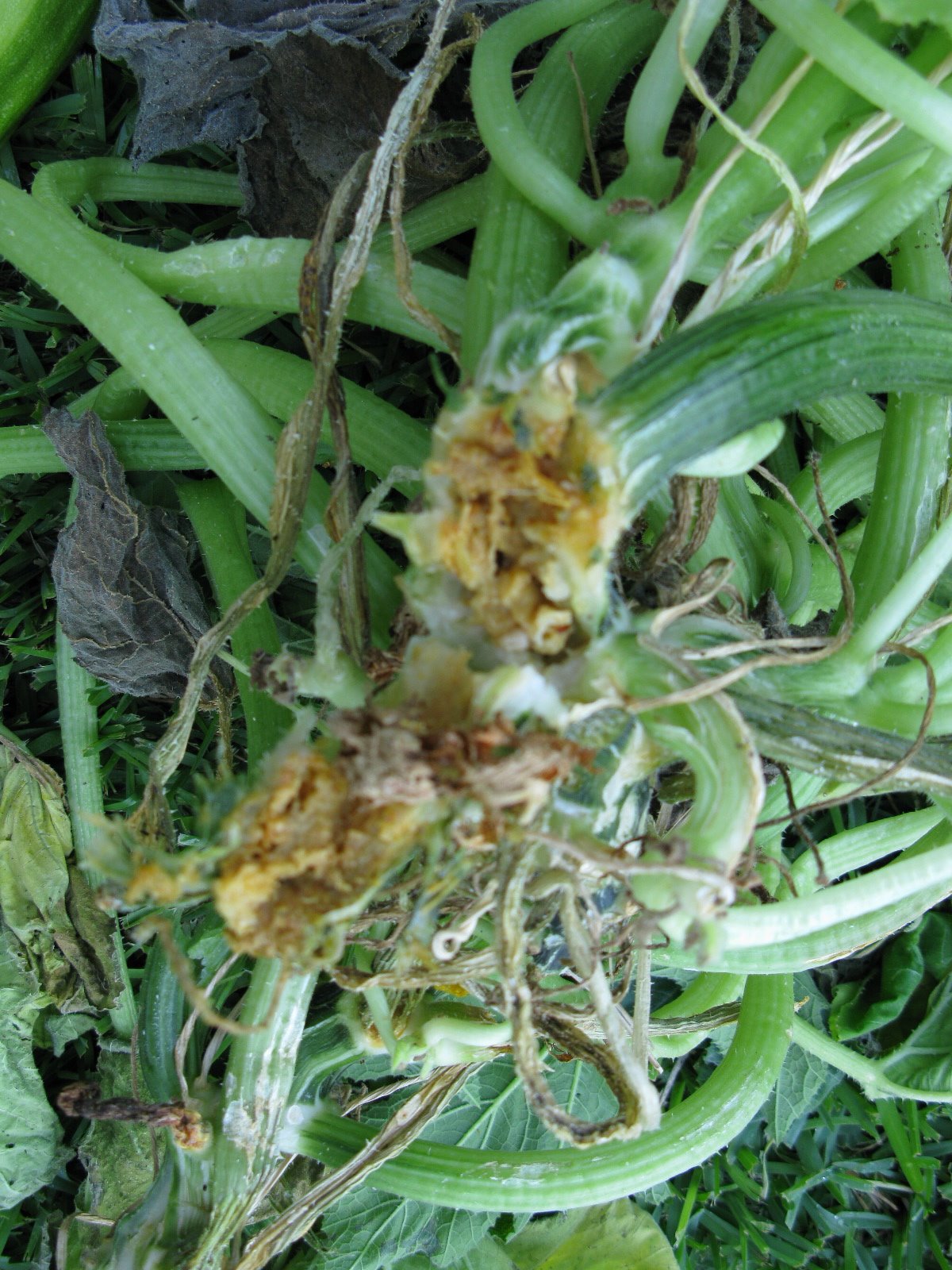
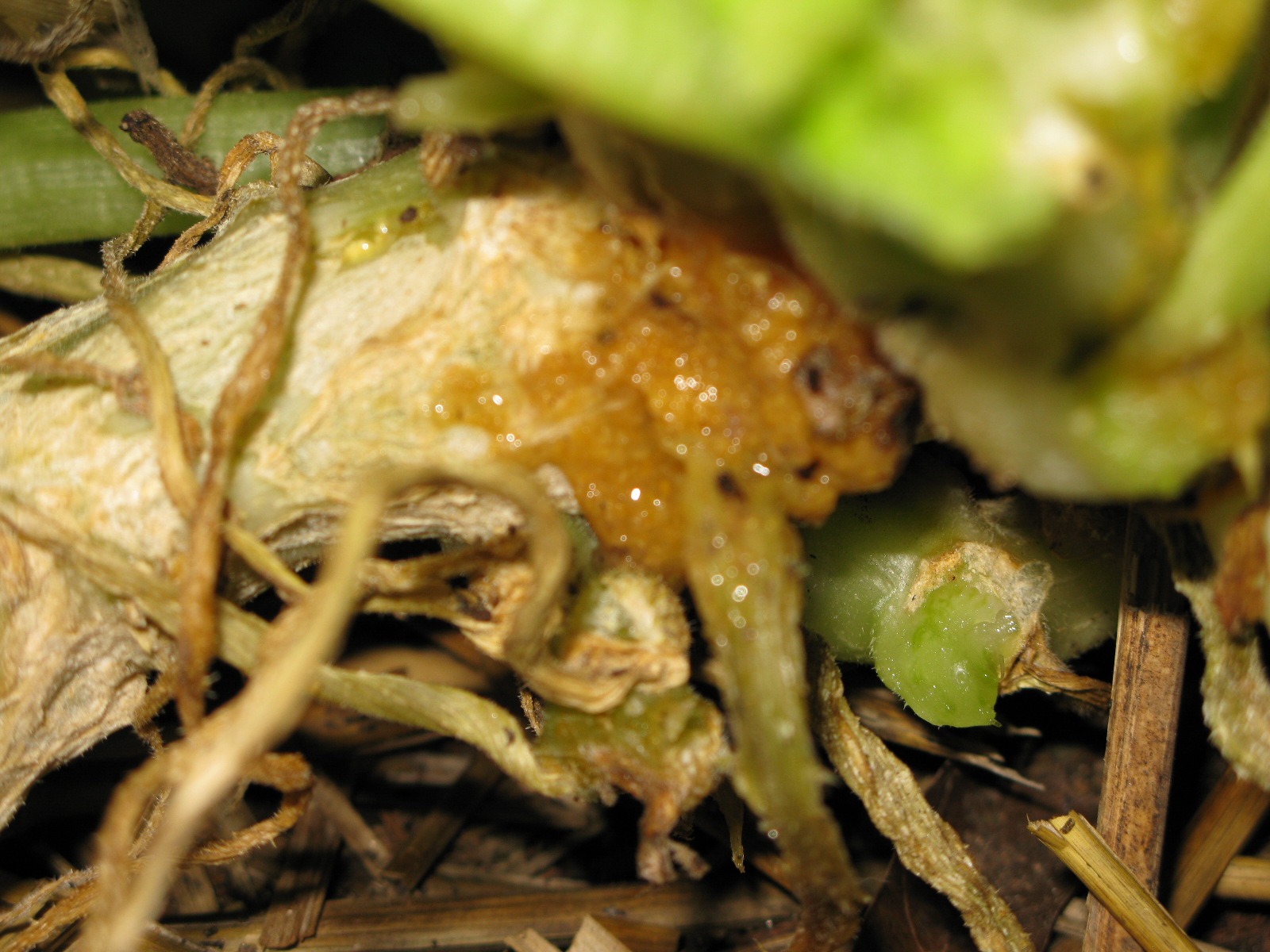
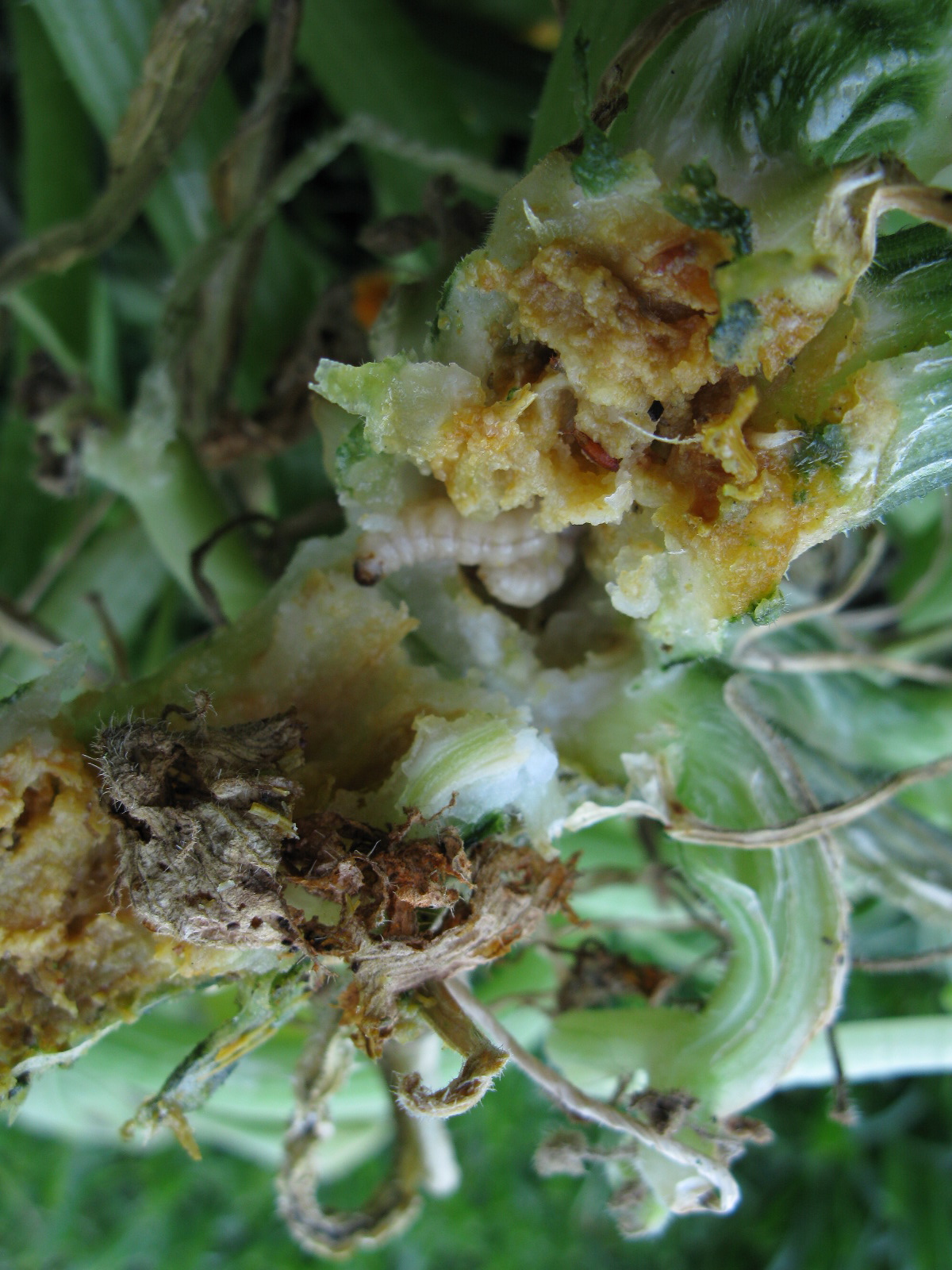
I’ve been enjoying my squash bounty knowing that it would eventually come to an end. The squash vine borers took out my pumpkin plants last year and I was waiting for their arrival this year. This morning I did my walk through before work and found one plant looking extremely pathetic. All of the leaves were drooping. Once I thought about it I realized that the leaves were a little droopy yesterday but I didn’t think anything of it. I should have known. Well anyway … it was too late for that plant. I ripped it out and started inspecting the others. Turns out I had a serious infestation on my hands. I found these terrible little creatures in all but one of my plants. I spent two hours digging them out. I lost two plants this morning and it looks like another three won’t make it. We’ll just have to wait and see about the rest. I hope I got all of them, but I’m not sure. By then end of my major surgery I was getting pretty good at determining exactly where the SVBs were, which hopefully did less damage to the plants. 

Squash Plant completely eaten through

An early catch. Here’s what to look for. The yellowish substance is called frass. You can’t always see it, since it is often underneath the plant, but you’ll always be able to feel the gooey glob where the SVB entered the plant. The plant feels dry aside from this. 

Carnage
More carnage

Read Full Post »

>

I was looking at my cute little tomatoes today and discovered that those pesky fire have set up camp right under my tomato plants. I did some research online and found two good solutions. One is diatomaceous eath (DE) which is a powder. The other is a liquid made of compost tea, orange oil and molasses. My plan is to go to the natural gardener this weekend and get their opinion. While I’m there I am also going to talk to them about some more bugs that are destroying my roses and how to keep bugs away from the figs. I know it’s a bit premature, seeing how small fig stick is presently, but my friend Joe wanted me to find out for him as well.  


As always the natural gardener was a wealth of knowledge. I brought my list of questions and a very nice guy, wish I had gotten his name, had an answer for everything.


Fire Ants – Nemotodes. He said these will not only take care of the fire ants, but other destructive pests as well. He said the nemotodes will be a great addition to the vegetable garden.

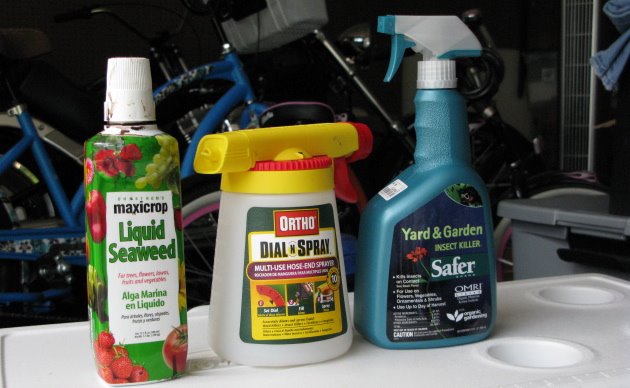
 Roses – I forgot my bug that I had collected to bring with me, but it didn’t seem to matter much. He gave me Safer brand yard and garden insect killer. It is completely organic and they said it will take care of thrips and whatever other bugs I may be seeing. Since I forgot to being the bug with me I looked it up on whatsthatbug.com. It appears that these bugs are katydids. 

Figs – First of all he said that figs are native to the area, so they have lots of natural defenses. If this isn’t enough, the best solution is garlic spray. He said take an entire bulb of garlic, break up the cloves to get them reacting and put them in water overnight. He said about a bulb per spray bottle is good. The next day spray all over the tree. I asked if this would create a garlic taste in the figs and he said as long as I wash them off before eating there won’t be a problem.

Peppers / Liquid Seaweed – I asked him if it was normal for me to see tomatoes but no peppers since I planted them at the same time. He is explained how the root systems are different and it does take peppers longer. We also went into a discussion on watering since I have been juggling between yellow leaves, due to overwatering, and losing flowers due to underwating. He gave me liquid seaweed which keeps the plants from dropping flowers. I purchased an ortho dial & spray which will work for the liquid seaweed and the nemotodes.


While I was there I also bagged 3 bags of mulch to supplement the mulch in my veggie garden as well as my daughter’s garden in the back yard. I’m always happy when leaving the natural gardener, even if my wallet is a bit lighter.

Read Full Post »

« Newer Posts